

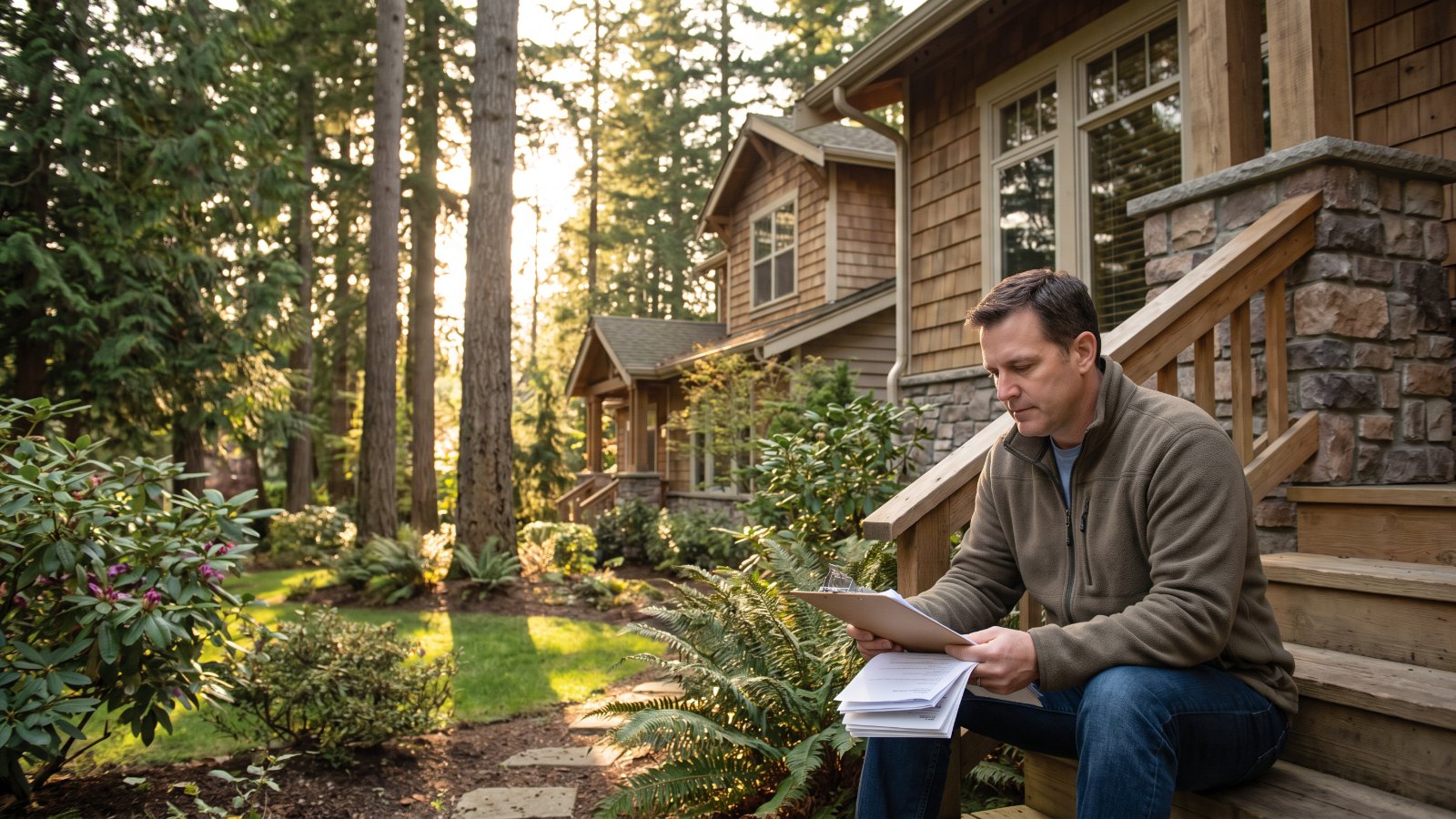
Buying a home on acreage in Pierce County means checking more than the house. Before you commit, confirm the zoning and what it allows, whether any part of the land is limited by critical areas like wetlands or steep slopes, how water and wastewater work (usually a private or shared well and a septic system), how the property is accessed, where the boundaries really are, and whether the land is in a current use tax program that could change your property taxes. Build time for these checks into your offer.
Places like Graham, Buckley, Orting’s outskirts, parts of Bonney Lake, and the Gig Harbor peninsula draw buyers who want room for animals, a shop, a garden, or just quiet. Acreage can be a great fit. It just comes with its own due diligence list.
1. Zoning and what you can build
Zoning controls things like how many homes are allowed, whether you can add an accessory dwelling or shop, and what uses are permitted. For unincorporated land, check with Pierce County Planning and Public Works. For land inside a city, check with that city. If you have specific plans, like a barn, a second home for family, or a business, confirm them before you remove contingencies, not after.
2. Critical areas and the usable part of the land
Wetlands, streams, steep slopes, flood zones, and other critical areas can limit where you build or clear, even on a large parcel. Ten acres doesn’t always mean ten usable acres. County mapping tools and, when needed, a professional assessment can show what’s buildable.
3. Water: private or shared wells
Many acreage homes rely on a private well or a small shared well system. Test water quality and quantity, and if the well is shared, get a copy of the well-sharing agreement to understand maintenance and costs. Our guide to well inspections when buying in Pierce County covers what to check.
4. Wastewater: septic systems
Most rural properties use an on-site septic system. Records and requirements are handled by the Tacoma-Pierce County Health Department. Review the system’s records and have it inspected. If you plan to add bedrooms or a second dwelling, ask whether the system would need to be expanded. Sellers can find more in our guide to selling a home with septic, and buyers will find the same issues from the other side.
Looking for land in Pierce County?
Josh can help you build an offer that leaves time for well, septic, zoning, and survey checks without losing the home to a faster buyer. Start with The Barnard Group.
5. Access, easements, and private roads
Rural homes are often reached by a private road or an easement across a neighbor’s land. Review the title report for recorded easements, and ask whether there’s a road maintenance agreement that spells out who plows, grades, and pays. The preliminary title commitment is where many of these issues first show up. See how title and escrow work in Washington.
6. Boundaries and surveys
Fences don’t always match property lines. If boundaries matter for your plans, such as fencing for animals or placing a shop, consider a survey. Standard title insurance generally doesn’t cover matters a survey would reveal, so ask your title company about extended coverage options.
7. Current use tax programs
Some rural land in Pierce County is enrolled in a current use program, such as farm and agricultural, open space, or designated forest land, which lowers property taxes in exchange for keeping the land in that use. According to Pierce County, when a classification is removed, additional tax, interest, and penalty are due. Find out whether the property is enrolled, whether you’d continue the program, and who pays if it’s removed. Our guide to how Pierce County property taxes work explains the basics.
8. Financing and insurance
Some lenders have limits on acreage, outbuildings, or income-producing land, and appraisals can be harder when there are few comparable sales. Talk with a lender experienced with rural properties early. Ask insurers about coverage for outbuildings, wells, and any animals.
Frequently asked questions
Can I put a second home on my acreage in Pierce County?
It depends on zoning, septic capacity, water, and critical areas. Confirm with the county or city and the health department before you buy.
Do I need a survey when buying land?
It’s not always required, but it’s wise when boundaries, fences, or building plans matter.
What happens if the land is in a current use program?
Ask the Pierce County Assessor-Treasurer how the classification affects you as a new owner, and what’s owed if it’s removed. Make sure the purchase agreement addresses it.
Buy land with your eyes open
The right acreage can give your family room to grow. Connect with Josh Barnard and The Barnard Group to find land that fits your plans and check the details that matter before you commit.
This article is general information, not legal advice. Land use rules change; confirm requirements with the county, your city, and the health department.