

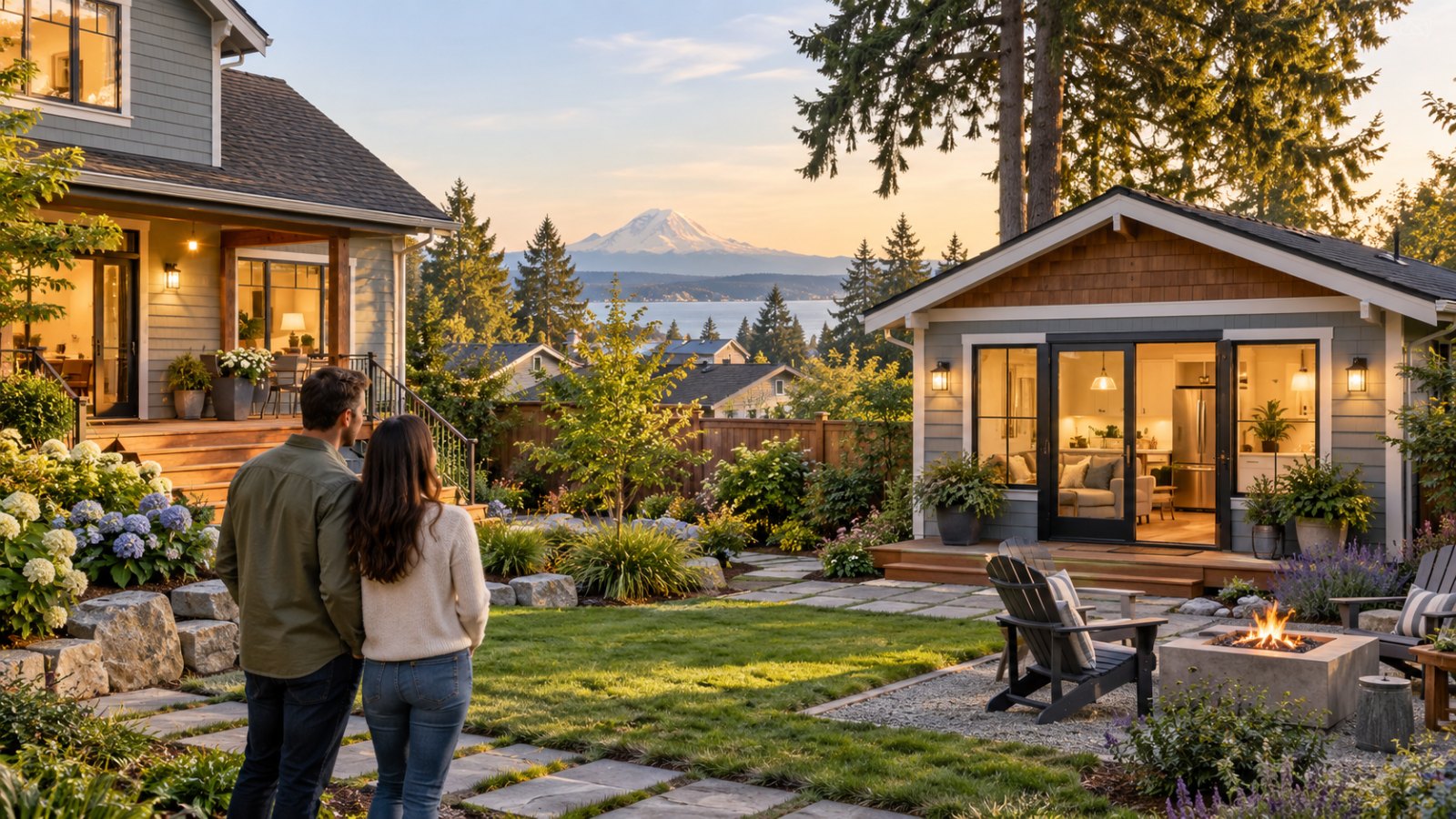
An accessory dwelling unit (ADU) is a second, smaller home on the same lot as a main house, such as a backyard cottage, a garage apartment, or a basement unit. Washington law now requires most cities and counties planning under the Growth Management Act to allow two ADUs on most residential lots inside urban growth areas and generally prohibits owner-occupancy requirements. In unincorporated Pierce County, current code allows two ADUs per lot inside urban growth areas and one outside them, with size limits. Whether you’re buying a home with an ADU or hoping to add one, confirm the rules for the specific address.
For Pierce County families, ADUs can mean space for aging parents, a place for adult kids to launch, a home office, or rental income. They can also affect value, taxes, and the details you need to check before you buy.
What changed in Washington
A 2023 state law, HB 1337, set minimum ADU rules for cities and counties that fully plan under the Growth Management Act. According to Department of Commerce guidance, within urban growth areas those jurisdictions must:
- Allow two ADUs on lots zoned for single-family homes, attached, detached, or one of each
- Not require the owner to live on the property
- Allow ADUs of at least 1,000 square feet
- Limit parking requirements, with none required near major transit stops
- Keep impact fees for ADUs at no more than half of those for the main home
Cities apply these rules through their own codes, so details vary. Check with the city for any address inside city limits.
Pierce County’s rules
For unincorporated Pierce County, the county code, PCC 18A.37.120, allows two ADUs per lot inside urban growth areas and one outside them. It limits ADUs to 1,000 square feet of habitable space inside urban growth areas and 1,250 square feet outside them, along with rules on placement, height, and parking. Rural lots also need adequate water and septic capacity, so check with the health department early.
Looking for a home with room for family?
Josh can help you find homes with an existing ADU or a lot that could support one, and check the details before you commit. Start with The Barnard Group.
Buying a home with an ADU: what to check
- Permits. Confirm the ADU was permitted and finaled. An unpermitted unit can affect financing, insurance, and value. See our guide to unpermitted work.
- Utilities. Shared or separate meters, and whether the septic system or sewer connection was sized for the added unit. On acreage, see buying a home on acreage.
- Rentals. If the ADU is rented, review the lease and Washington’s landlord rules. Our guide to selling a house with tenants covers how existing leases carry over.
- HOA rules. Some communities restrict ADUs or rentals. Review the documents early; see HOA resale certificates.
- Financing and appraisal. Ask your lender how the ADU and any rental income will be treated.
Thinking about adding an ADU?
- Confirm zoning and ADU rules for your address with the city or county.
- Check lot size, setbacks, and critical areas.
- Confirm sewer or septic capacity and water.
- Get cost estimates, including permits and impact fees.
- Talk with a lender about financing, such as using home equity.
How ADUs can affect value
A permitted, well-built ADU can widen your buyer pool, especially among multigenerational families and buyers who want rental income. It can also raise your assessed value and property taxes. How much value it adds depends on quality, layout, privacy, and local demand, which is why we look at comparable sales rather than assume a fixed number.
Frequently asked questions
Can I have two ADUs on my lot in Pierce County?
In unincorporated Pierce County, two ADUs are allowed per lot inside urban growth areas and one outside them. Inside a city, check that city’s code.
Do I have to live on the property to rent an ADU?
For jurisdictions covered by HB 1337, owner-occupancy requirements generally aren’t allowed within urban growth areas. Confirm for your location.
Can an ADU be sold separately?
State law bars jurisdictions from prohibiting the separate sale of a condominium unit solely because it was built as an ADU, but creating a condo requires its own legal process. Talk to an attorney.
Plan for the space your family needs
Whether you want to buy a home with an ADU or add one later, the details matter. Book a complimentary strategy session with Josh Barnard and The Barnard Group to plan your next move.
This article is general information, not legal advice. ADU rules change and vary by jurisdiction; confirm requirements with your city or Pierce County.