

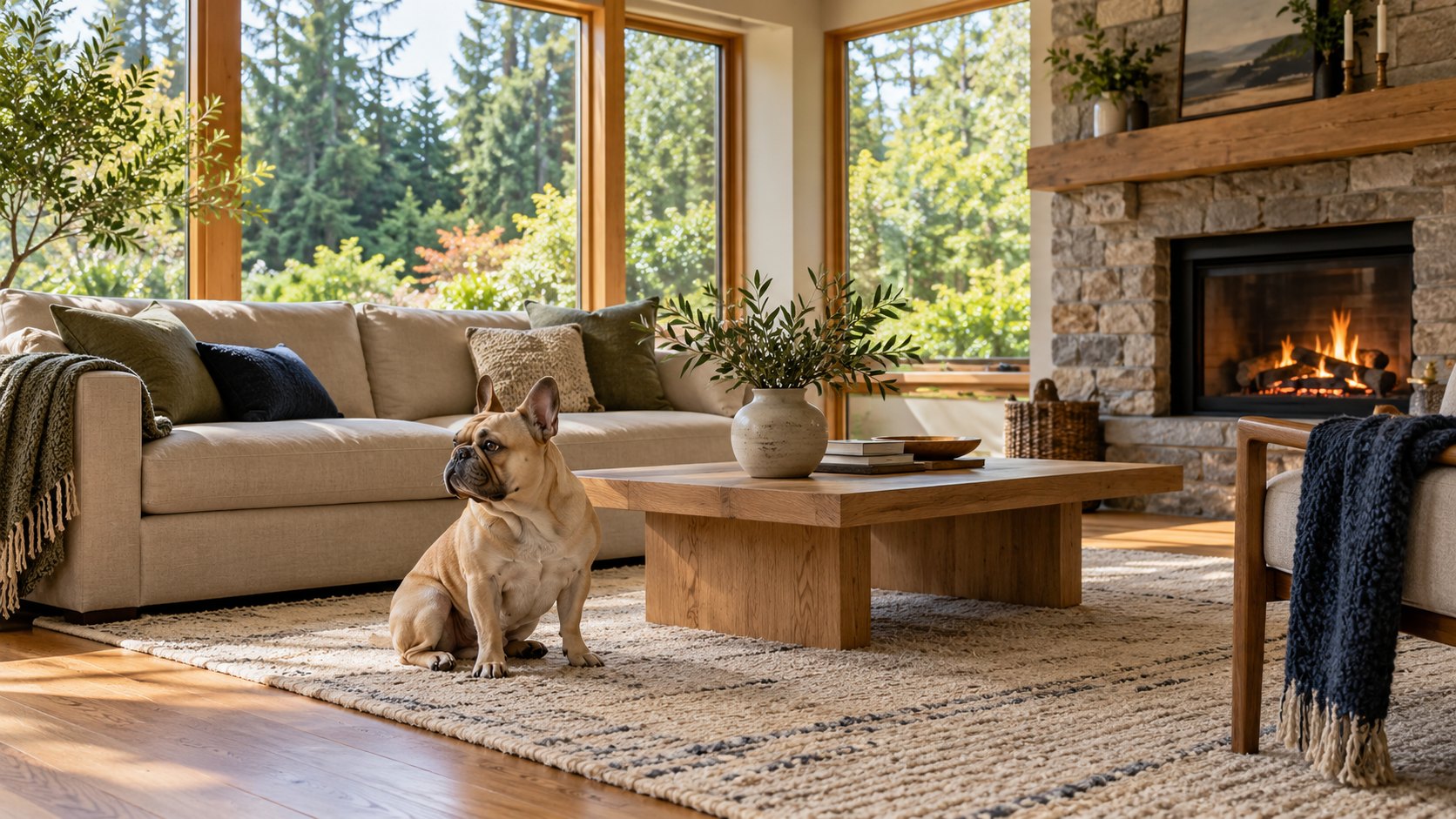
How do you sell a home where pets have lived?
Focus on what buyers notice first: odor, then visible damage. Deep-clean carpets, upholstery, and HVAC; treat or replace pet-stained carpet and pad; repair scratched floors, doors, and trim; patch and paint; and fix chewed or dug-up areas in the yard. Use enzyme cleaners on urine spots and have someone without pets do a “smell test.” During showings, take pets out of the house and put away bowls, beds, litter boxes, and toys. These steps help your home show — and appraise — at its best.
We love our pets. But buyers walking through your home are picturing their own life there, and a smell or a scratched-up door pulls them right out of it.
The good news: most pet-related issues are fixable, and many are inexpensive. Here’s how I walk Pierce County sellers through it. For the full prep process, see how to prepare your Pierce County home for sale.
Start with odor
You likely can’t smell your own pets. Buyers can, often within seconds. Ask a friend without pets for an honest opinion.
- Clean carpets and rugs with a professional service, using enzyme treatment on spots.
- Check carpet pad and subfloor. Urine that soaks through may need pad replacement and a sealing primer on the subfloor.
- Clean or replace HVAC filters and consider duct cleaning.
- Wash or remove pet bedding, throws, and fabric that holds odor.
- Air the house out and avoid heavy air fresheners — buyers notice cover-up scents too.
Repair the visible damage
- Floors: buff or refinish scratched hardwood; replace damaged laminate planks or carpet.
- Doors and trim: fill and paint scratches, especially on doors pets wait at.
- Walls: patch and paint scuffs and chewed corners.
- Screens and blinds: replace torn screens and bent blinds.
- Yard: fill holes, reseed or refresh worn grass, clean up waste, and repair fencing.
Not sure what’s worth doing? Here’s which improvements are worth making before selling, and whether to sell as-is or make repairs.
Flooring: replace or credit?
If carpet is badly stained or smells, replacing it with a neutral, affordable option often pays for itself in buyer response. If your timeline is tight, a flooring credit is another option, but buyers often discount more than the actual cost.
Showings, photos, and open houses
- Remove pets during showings. Not every buyer likes animals, and some are allergic.
- Put away pet items — bowls, beds, crates, toys, litter boxes — before photos and every showing.
- Plan a routine: doggy daycare, a friend, or a quick drive during showings.
- Note it in showing instructions if a pet must stay home, and keep it safely crated.
Here’s what to expect during showings and open houses.
Disclosure
Washington’s Form 17 asks about known defects. Pet damage you’ve repaired usually doesn’t need special mention, but don’t hide known problems like damaged subfloor. When in doubt, disclose.
Frequently Asked Questions
Do pet odors lower home value?
They can. Pet odors are one of the most common buyer objections and can lead to lower offers or requests for credits. Deep cleaning and treating the source before listing helps.
Should I replace carpet before selling a house with pets?
If the carpet is stained or holds odor, replacing it with a neutral, affordable option often improves buyer response. Check the pad and subfloor too.
Where should my pets go during showings?
Ideally out of the house — with a friend, at daycare, or on a walk or drive. If a pet must stay, keep it safely crated and note it in showing instructions.
How do I get rid of pet urine smell before selling?
Use enzyme cleaners on spots, professionally clean carpets, and check whether urine reached the pad or subfloor. Badly affected areas may need replacement and a sealing primer.
Do I have to disclose pet damage when selling in Washington?
Washington’s Form 17 asks about known defects. Repaired cosmetic damage usually isn’t an issue, but known problems like damaged subfloor should be disclosed.
Let buyers picture their life, not your pets’
A little cleaning and a few repairs can make a pet-friendly home feel brand new to buyers. Tackle odor first, then damage, then presentation.
If you’re weighing a move, The Barnard Group’s complimentary Home Selling Strategy Session walks you through your home’s current value, your options, and a plan built around your timeline.
About Josh Barnard
Josh Barnard is the founder of The Barnard Group and has spent over 20 years helping families navigate some of life’s biggest moments through real estate. Known for his “Work Hard. Be Kind.” approach, Josh combines expert market knowledge, innovative marketing, and genuine care to help homeowners make confident decisions about their next chapter. Whether someone is buying their first home, moving up, downsizing, or relocating to Pierce County, his mission is simple: serve people well, create unforgettable experiences, and help families build a life they love.
Researched October 27, 2026. This is general information, not legal advice.