

What should you know about selling a home that may have asbestos?
Asbestos was common in homes built before the 1980s, in popcorn ceilings, vinyl flooring and mastic, duct and pipe wrap, siding, and some roofing. Washington’s seller disclosure, Form 17, asks whether there are substances that may be environmental concerns and names asbestos specifically, so disclose what you know and share any test results. You aren’t required to test before selling. But if you plan to remove or disturb suspect materials before listing, the Puget Sound Clean Air Agency requires an asbestos survey first, and removal generally needs notification and, in most cases, a certified contractor.
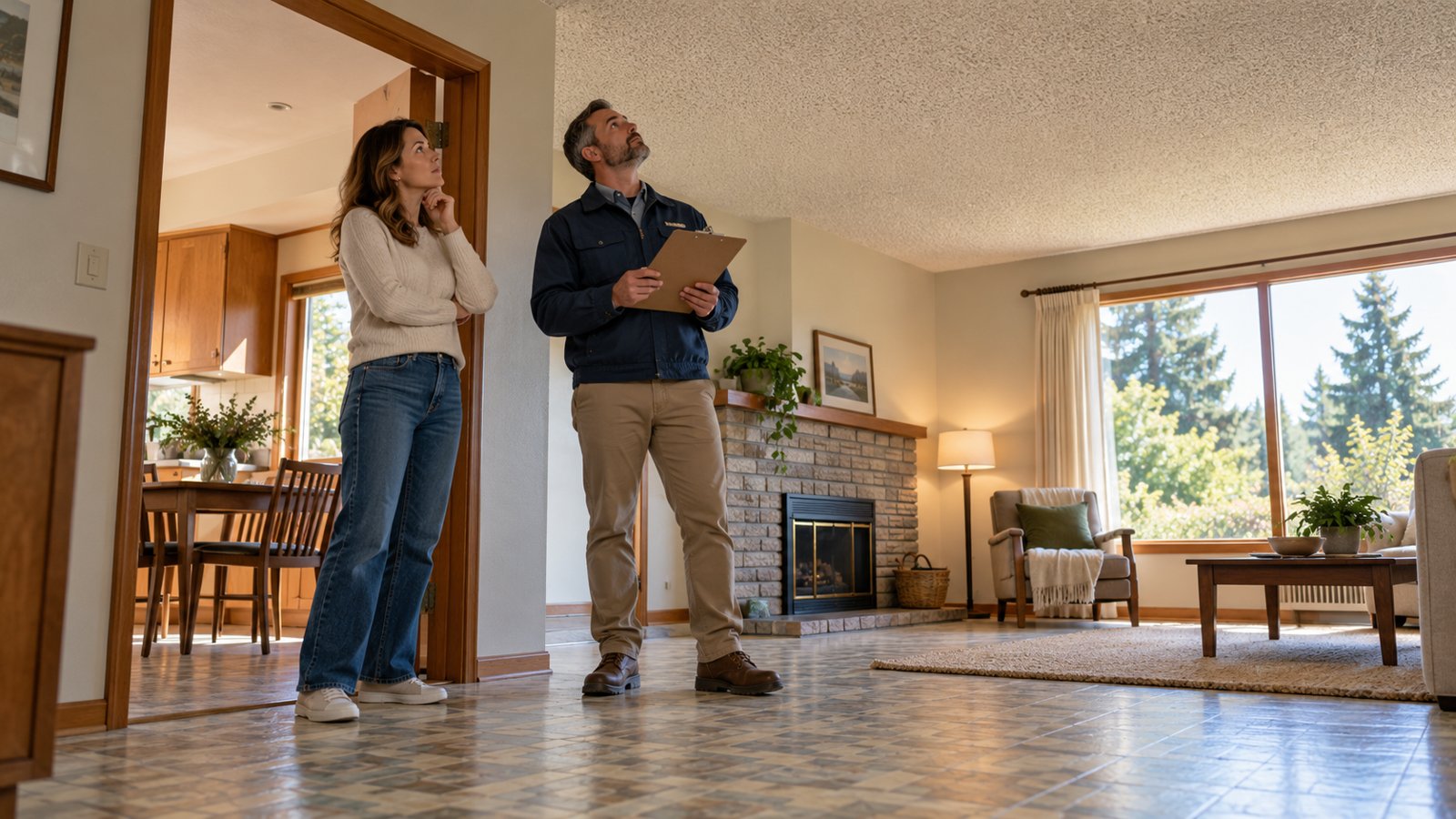
Plenty of Pierce County homes from the 1950s through the 1970s have textured ceilings, old sheet vinyl, or wrapped heating ducts. Buyers and inspectors know to look for them.
That doesn’t make a home hard to sell. What matters is accurate disclosure and not making the problem worse. Here’s how to handle it. For the full seller process, see our guide to Selling a Home in Pierce County.
Where asbestos is commonly found
- Popcorn or textured ceilings
- Vinyl floor tiles, sheet flooring, and the mastic underneath
- Duct wrap, pipe insulation, and old furnace parts
- Cement-based siding and some roofing
- Older drywall joint compound and plaster
You can’t tell by looking. Only lab testing confirms it.
What to disclose
Form 17 asks whether there are substances in or on the property that may be environmental concerns, and lists asbestos among the examples. Answer based on what you know:
- You’ve tested and found asbestos: disclose it and share the report
- You’ve had material removed: disclose it and share abatement records
- You don’t know: say so. Sellers aren’t required to test.
Here’s a full guide to Form 17. Homes built before 1978 also come with a federal lead paint disclosure. Here’s how lead paint disclosure works.
Thinking about removing it before you list?
Be careful. In Pierce County, the Puget Sound Clean Air Agency regulates asbestos during renovation and demolition:
- A survey is required before renovation or demolition that could disturb suspect materials, regardless of the home’s age
- Owners of single-family, owner-occupied homes may perform their own survey, but it must be accurate and meet the regulations
- Notification and a fee are required before asbestos is removed
- Removal generally requires a certified asbestos contractor; confirm with the agency what applies to your project
- Penalties for violations can be significant
My take: For most sellers, leaving intact materials alone and disclosing them is simpler than a rushed removal. Scraping a popcorn ceiling to “update” before listing can create a bigger problem.
Repair, credit, or price?
| Situation | Usual approach |
|---|---|
| Intact materials, no plans to disturb | Disclose; let buyers decide |
| Buyer’s inspection flags suspect materials | Offer testing results or a credit for future abatement |
| Damaged or crumbling materials | Get professional advice; consider abatement or pricing for it |
| You’re remodeling anyway | Survey first, then follow agency rules |
Here’s how to weigh selling as-is or making repairs.
Frequently Asked Questions
Do I have to disclose asbestos when selling a house in Washington?
Form 17 asks about environmental concerns and names asbestos. If you know about asbestos or have test results, disclose them. If you don’t know, say so.
Do I need to test for asbestos before selling?
No. Sellers aren’t required to test. Buyers can choose to test during their inspection period.
Can I remove a popcorn ceiling before selling?
Not without following the rules. In Pierce County, the Puget Sound Clean Air Agency requires an asbestos survey before renovation that could disturb suspect materials, and removal generally requires notification and a certified contractor.
Does asbestos lower a home’s value?
It can affect buyer negotiations, especially if materials are damaged or a buyer plans to remodel. Intact, disclosed materials are often handled with a credit or price discussion.
What homes are likely to have asbestos?
Homes built before the 1980s are more likely to have asbestos in ceilings, flooring, insulation, siding, or roofing. Only lab testing confirms it.
Disclose, don’t disturb
Older homes have character and value. Handling asbestos questions honestly and carefully keeps your sale on track and your family safe.
If you’re preparing to sell an older home, book a Home Selling Strategy Session with The Barnard Group.
About Josh Barnard Josh Barnard is the founder of The Barnard Group and has spent over 20 years helping families navigate some of life’s biggest moments through real estate. Known for his “Work Hard. Be Kind.” approach, Josh combines expert market knowledge, innovative marketing, and genuine care to help homeowners make confident decisions about their next chapter. Whether someone is buying their first home, moving up, downsizing, or relocating to Pierce County, his mission is simple: serve people well, create unforgettable experiences, and help families build a life they love.
Researched October 17, 2026. Rules can change. Confirm requirements with the Puget Sound Clean Air Agency and use certified professionals. This is general information, not legal advice.