

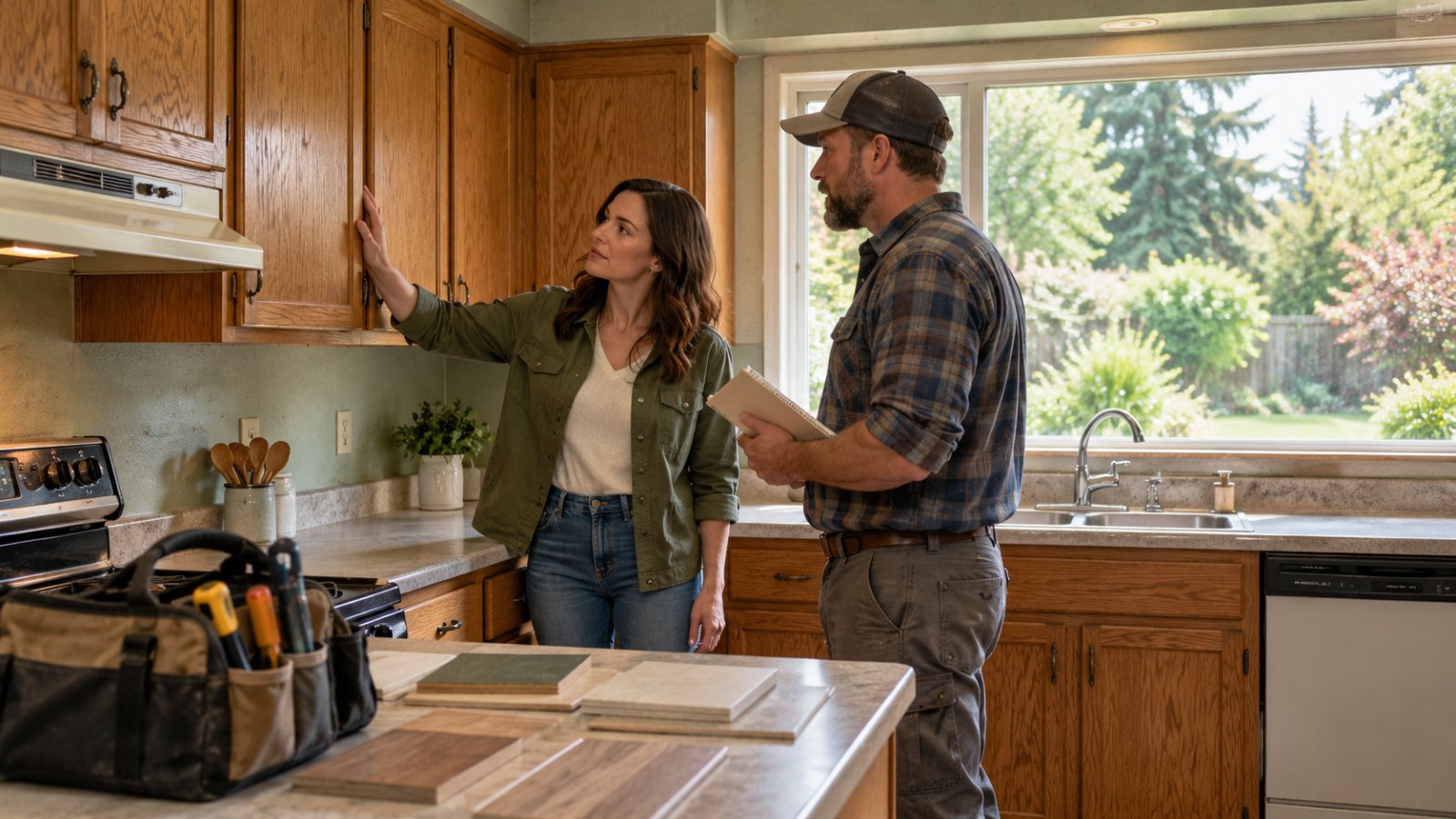
Buying a fixer-upper in Pierce County can get you into a better location or a larger home for your budget, but only if you understand the true cost before you commit. Get a thorough inspection, plus specialized inspections like a sewer scope or roof evaluation when needed. Get contractor estimates before your inspection contingency expires, and check permit requirements with the city or county. Have a financing plan, such as cash reserves or a renovation loan, and add a cushion for surprises, which are common in older homes in our wet climate.
Pierce County has plenty of older homes with good bones, from Tacoma bungalows to mid-century ranches in Puyallup and Lakewood-area neighborhoods. Here’s how to tell a good project from a money pit.
For buyers comparing areas and housing styles, our Pierce County Relocation Hub is a good starting point.
Cosmetic vs. structural
| Usually manageable | Needs careful evaluation |
|---|---|
| Paint, flooring, fixtures | Foundation movement or drainage problems |
| Kitchen and bath updates | Roof replacement |
| Landscaping and fencing | Sewer line or septic failure |
| Minor electrical and plumbing fixes | Older wiring, moisture, or mold |
Western Washington’s rain makes moisture the most common hidden issue. Pay close attention to crawlspaces, roofs, gutters, and grading.
Inspections to plan for
- General home inspection with an experienced inspector
- Sewer scope for homes on public sewer; see sewer scope inspections
- Septic and well inspections for rural homes; see well inspections
- Roof, structural, or electrical specialists when the inspector recommends them
Your inspection contingency gives you a window to do this work, so schedule contractors quickly.
Looking at a home that needs work?
Josh can help you size up the project, line up inspections, and write an offer that protects you while you get real repair estimates. Schedule a conversation.
Build a realistic budget
- Get written estimates for the major work.
- Add a contingency for surprises, often 10% to 20% of the project cost depending on the home’s age and condition.
- Include permit fees and timelines; check with the city or Pierce County.
- Plan where you’ll live during major work.
- Compare the total with similar move-in-ready homes.
Our guide to how much house you can afford helps you set the overall budget.
Financing options
Some buyers pay for renovations from savings. Others use renovation loan programs that combine the purchase and repairs in one loan, such as FHA 203(k) or conventional renovation loans. These have their own requirements and timelines, so talk with a lender early. Also note that some homes may not meet standard loan requirements until repairs are made.
Permits matter
Major electrical, plumbing, structural, and addition work usually requires permits. Unpermitted work can affect resale, insurance, and financing. See unpermitted work in Pierce County.
Frequently asked questions
Is buying a fixer-upper cheaper than buying move-in ready?
Sometimes, but only after you add repair costs, time, and a contingency. Compare the all-in cost.
Can I use a regular mortgage on a fixer-upper?
If the home meets the lender’s property standards. If not, a renovation loan may be an option.
What’s the biggest risk with older Pierce County homes?
Moisture and drainage problems, along with aging sewer lines and roofs. Specialized inspections help.
Buy the project with your eyes open
The right fixer-upper can be a great value with a clear plan. Schedule a conversation with Josh Barnard and The Barnard Group.
This article is general information. Repair costs vary widely; get professional inspections and estimates.