

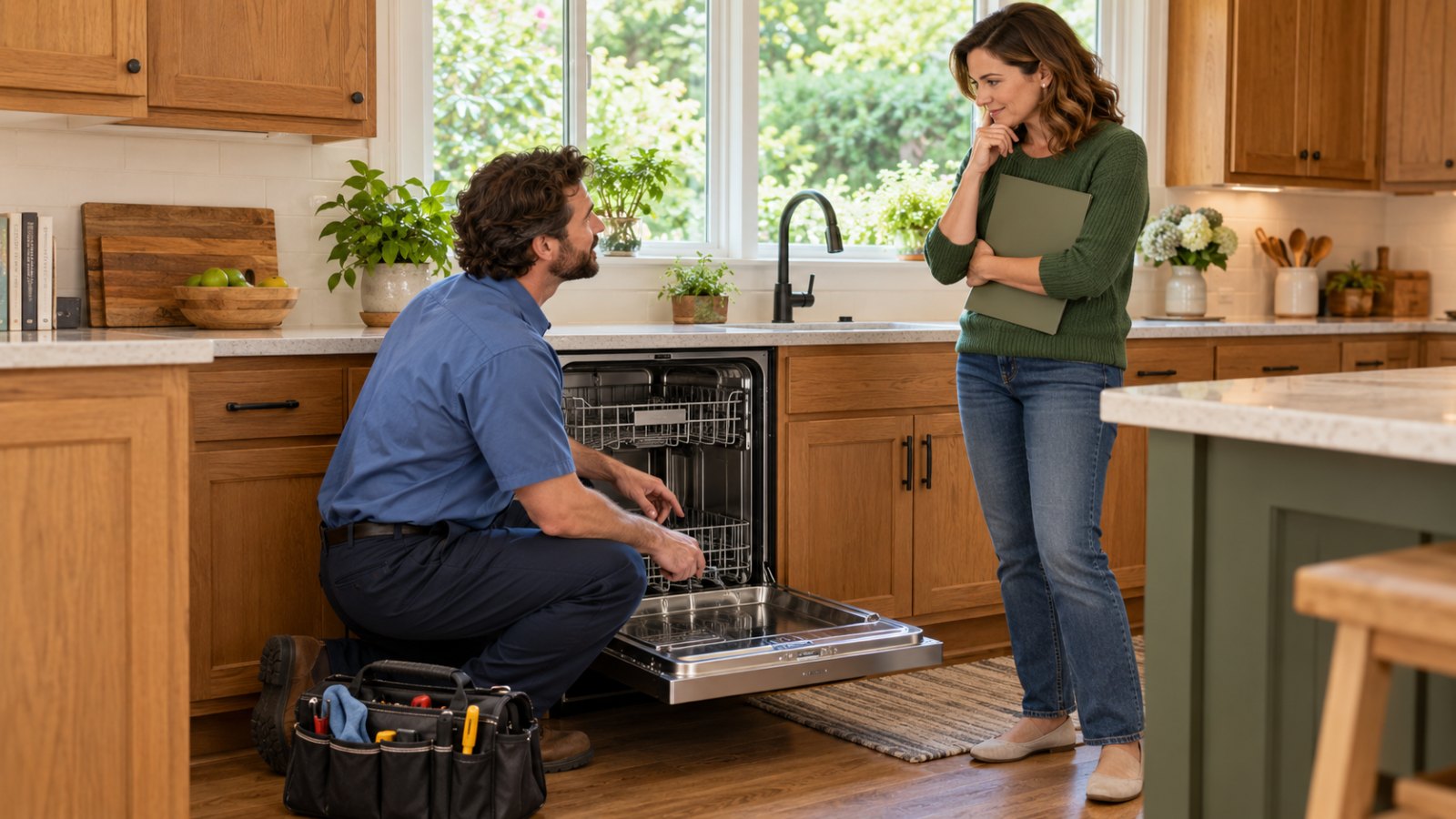
A home warranty is a service contract that helps pay to repair or replace covered home systems and appliances, such as a furnace, water heater, or dishwasher, when they fail from normal wear. For sellers, offering one can reassure buyers about an older home’s systems. For buyers, it can soften the cost of an early breakdown. But coverage has limits, exclusions, and service fees, so whether it’s worth it depends on the age of the home’s systems and the specific contract. A home warranty does not replace a home inspection or homeowners insurance.
Home warranties come up often in Pierce County transactions, especially with older homes. Here’s a clear-eyed look at what they do and don’t do.
What a home warranty covers, and what it doesn’t
| Often covered (varies by plan) | Often limited or excluded |
|---|---|
| Heating systems and water heaters | Pre-existing conditions |
| Plumbing and electrical systems | Code upgrades and permits |
| Built-in appliances | Roofs, structure, and foundations (often limited) |
| Optional add-ons like pools or wells | Damage from lack of maintenance |
Read the actual contract. Coverage caps, service-call fees, and exclusions vary widely between companies and plans.
How home warranties are regulated in Washington
In Washington, service contract providers must register with the Office of the Insurance Commissioner. Before buying a plan, confirm the company is registered and review how claims are handled.
For sellers: when offering one can help
A home warranty can be a modest, practical concession when your home has older systems that still work. It can ease a buyer’s worries without a larger price cut. It works best as one tool in your negotiation strategy, not a substitute for addressing real defects. Our Pierce County home selling guide covers the broader plan, and our guide to seller concessions explains how credits and extras fit into negotiations.
Some sellers also buy coverage during the listing period to protect against a breakdown before closing. Ask whether that option is available and what it costs.
Wondering what to offer buyers?
Josh can help you decide whether a home warranty, a repair, or a credit makes the most sense for your home and your buyer. Talk through your options.
For buyers: is it worth it?
- Worth considering when the furnace, water heater, or appliances are older but working.
- Less useful when major systems are new and still under manufacturer warranties.
- Not a substitute for a thorough inspection. See inspection contingencies.
- Not insurance. Homeowners insurance covers sudden events like fire or certain water damage; a warranty covers wear-and-tear failures of covered items.
Questions to ask before you buy a plan
- What’s the service-call fee per visit?
- What are the coverage caps for each system or appliance?
- How are pre-existing conditions defined?
- Can I choose my own contractor?
- Is the company registered with the Washington Office of the Insurance Commissioner?
Frequently asked questions
Who usually pays for a home warranty in a sale?
It’s negotiable. Sellers sometimes offer one to buyers; buyers can also purchase their own.
Does a home warranty cover a roof leak?
Often only in a limited way, if at all. Check the contract, and remember that roofs are usually a separate inspection topic.
Is a home warranty the same as homeowners insurance?
No. Insurance covers sudden, accidental damage; a warranty covers wear-and-tear failures of covered items.
Make the right call for your home
A home warranty can be a helpful tool when it’s used in the right situation. Book a complimentary strategy session with Josh Barnard and The Barnard Group.
This article is general information. Coverage varies by contract; read terms carefully before purchasing.