

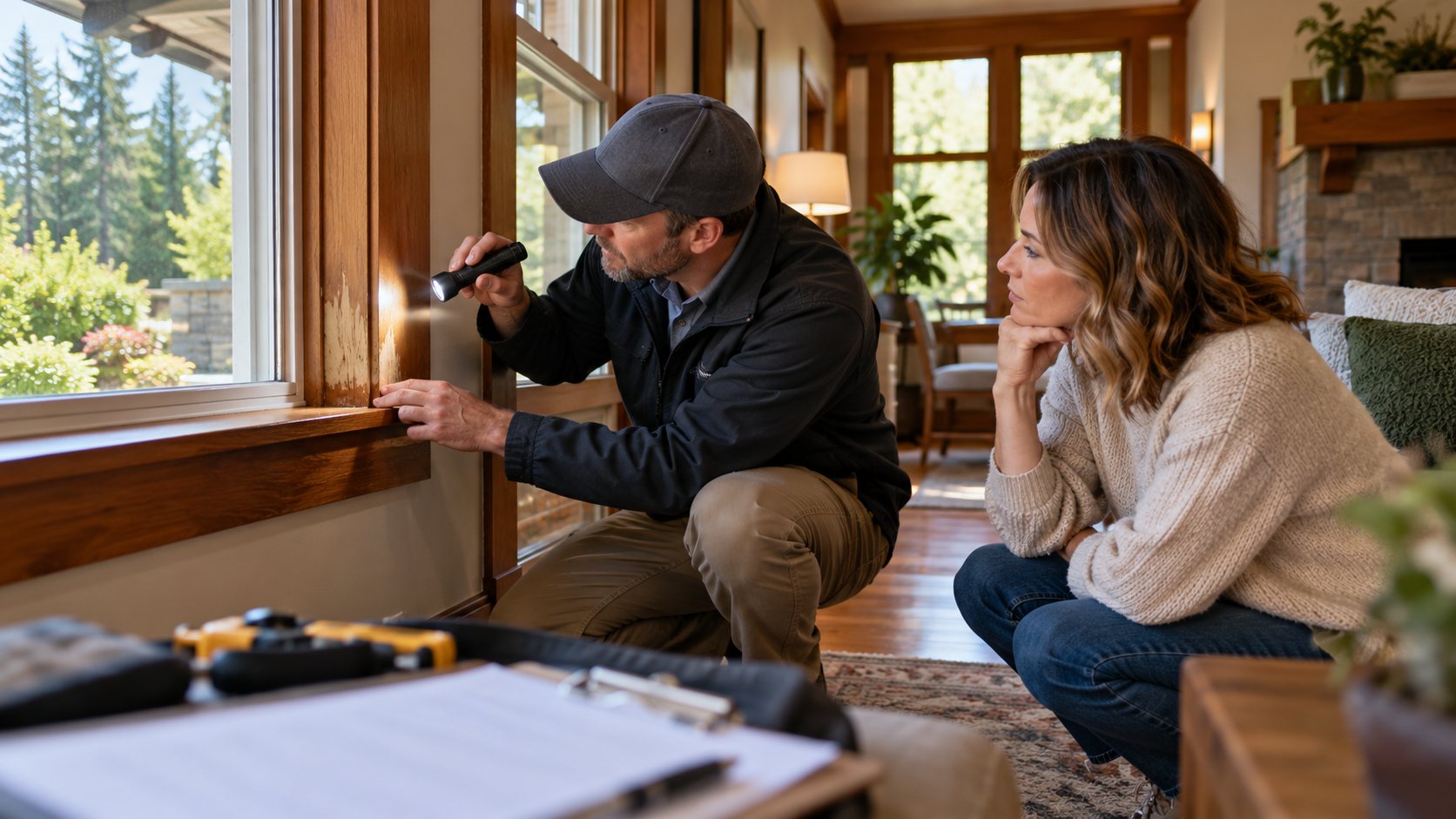
How should a Pierce County seller respond to a buyer’s inspection request?
Sort the request into three groups: safety and major systems (roof, electrical, plumbing, sewer, structure), items the buyer’s lender may require, and cosmetic or maintenance items. Take the first two seriously, push back on the third, and decide whether a repair, a credit, or a price reduction solves each issue with the least risk to your closing. In Washington, the NWMLS inspection addendum (Form 35) sets the deadlines, so respond on time and in writing through your agent.
The inspection is the moment many sales get shaky. You’ve reached mutual acceptance, you’ve started thinking about the next home — and then a 40-page report and a list of requests land in your inbox.
Take a breath. An inspection request is a negotiation, not a verdict. Most deals in Pierce County get through it just fine when sellers respond calmly and strategically.
Here’s how I walk my sellers through it. If you’re still earlier in the process, our Pierce County home selling guide covers pricing, preparation, and every step leading up to this point.
How the inspection process works in Washington
Most Pierce County purchase agreements include the NWMLS Form 35 Inspection Addendum. In general terms:
- The buyer has a set inspection period after mutual acceptance — commonly about 10 days unless the parties agree otherwise.
- The buyer can accept the home as-is, request repairs or other changes, or terminate under the contingency.
- If the buyer sends a request, the seller has a short window to respond — agree, decline, or offer something different. The buyer then decides whether to accept your reply or end the transaction.
- Missing a deadline has consequences, so read your specific addendum and keep your agent close.
For the buyer’s side of this process, here’s how inspection contingencies work in Washington.
Step 1: Sort the request into three groups
When a request comes in, I put every item into one of three buckets.
Bucket 1: Safety and major systems — take these seriously
- Active roof leaks or a roof at the end of its life
- Electrical hazards — exposed wiring, double-tapped breakers, missing GFCI protection in wet areas
- Plumbing leaks, failing water heaters, or venting problems
- Sewer line damage found on a sewer scope — very common on older homes in Western Washington
- Structural concerns, drainage that’s moving water toward the foundation, or rot
- Septic problems on rural properties
These are the items most buyers won’t walk away from quietly — and the next buyer’s inspector will find them too.
Bucket 2: Lender-required items — usually non-negotiable
Some loan types, especially FHA and VA, have property condition standards. If the appraiser flags peeling paint on an older home, missing handrails, or a broken window, the loan may not close until it’s addressed. These items are about getting to closing, not about who wins the negotiation.
Bucket 3: Cosmetic and maintenance items — negotiable
- Worn carpet, scuffed paint, or dated fixtures
- Small caulking, weatherstripping, or gutter-cleaning items
- Systems that work but are older
- “Recommend further evaluation” notes on things that are functioning
A buyer’s inspection is meant to find material defects, not to turn a used home into a new one. It’s fine to decline these politely.
Step 2: Choose repair, credit, or price reduction
Once you know which items matter, decide how to solve them.
Option A: Make the repair
Best when: the item affects safety or financing, or the buyer’s lender needs it done before closing.
- Use licensed contractors and keep invoices and receipts
- Get the buyer’s written agreement on the scope of work
- Leave enough time before closing — contractor schedules in Pierce County can run weeks out
Option B: Offer a credit at closing
Best when: the repair is significant, the buyer wants to choose their own contractor, or the timeline is tight.
- The buyer receives a credit toward closing costs through escrow
- Lenders limit how much a seller can contribute to a buyer’s costs, based on the loan type and down payment. Fannie Mae, for example, caps seller contributions at 3% to 9% of the price on conventional loans depending on the down payment.
- A credit can’t usually exceed the buyer’s actual closing costs — your agent and escrow will confirm what fits
Option C: Reduce the price
Best when: the credit would exceed what the buyer’s loan allows, or the issue is large enough to change the home’s value.
- A price reduction lowers the buyer’s loan and your sale price
- The appraisal is already ordered on the original price in many cases, so coordinate timing with the buyer’s lender
My take: For anything involving safety, the sewer line, or the roof, I usually prefer that sellers either fix it with a licensed contractor or give a clean credit. Half-done repairs can create new problems at the final walkthrough.
Step 3: Run the numbers before you say no
Here’s a quick way to think about it. Say the buyer asks for $9,000 for a sewer line repair.
- Say yes: You net $9,000 less, but stay on track to close in about three weeks.
- Say no and lose the buyer: The home goes back on the market. The sewer issue now needs to be disclosed on your Form 17. You may lose two to four weeks, carry another month of mortgage, taxes, and utilities, and face the same repair request from the next buyer.
Sometimes saying no is the right move. But compare the two outcomes in net dollars and days, not pride. Our guide on how to read a seller net proceeds estimate helps you see exactly what each choice does to your bottom line.
What you can do now to avoid a big inspection request
The best inspection negotiation happens before you list.
- Get a pre-listing inspection. You find problems on your timeline, not the buyer’s. Here’s when a pre-listing inspection makes sense.
- Order a sewer scope if your home is older and on city sewer. It’s one of the most common surprise repairs in Western Washington. Learn what a sewer scope covers.
- Fix the obvious items — leaky faucets, missing GFCIs, smoke and carbon monoxide detectors, cracked windows.
- Gather records — roof age, furnace service, septic pumping, permits. Buyers relax when they see documentation.
Mistakes I see sellers make
- Taking the request personally. It’s a business negotiation, not a judgment of how you cared for your home.
- Responding late. A missed deadline can hand the buyer an easy exit.
- Making repairs without written agreement. You may fix the wrong thing — or fix it in a way the buyer won’t accept.
- Offering a credit the buyer’s loan can’t use. Confirm the limit with the buyer’s lender through your agent first.
- Forgetting the next buyer. If the deal ends, what you now know about the home generally needs to be disclosed. Here’s what happens if a buyer backs out of your home sale.
Frequently Asked Questions
Do I have to make the repairs a buyer asks for after an inspection in Washington?
No. Sellers can agree, decline, or offer an alternative such as a credit or price reduction. The buyer can then accept your response or, depending on the inspection addendum, terminate the transaction. Your purchase agreement sets the deadlines.
Is it better to give a credit or make repairs?
A credit is often simpler when the repair is large or time is short, because the buyer chooses their own contractor. Repairs make more sense when the item affects safety or the buyer’s loan approval. Lenders limit how much a seller can contribute, so confirm the credit fits the buyer’s loan.
How much can a seller credit a buyer at closing?
It depends on the buyer’s loan. Fannie Mae conventional loans allow seller contributions of 3% to 9% of the price depending on the down payment, FHA generally allows up to 6%, and VA has its own concession limits. Credits generally can’t exceed the buyer’s actual closing costs.
What inspection items should a seller always fix?
Prioritize safety hazards, active leaks, failing major systems, sewer or septic defects, and anything the buyer’s lender requires to close. Cosmetic and routine maintenance items are usually negotiable.
If the buyer walks away after inspection, do I have to disclose what they found?
Generally, once you know about a material defect, you should update your Form 17 seller disclosure for the next buyer. Talk to your agent, and consult a real estate attorney if you’re unsure what applies.
Get through inspection with your deal intact
An inspection request isn’t the end of your sale — it’s a normal step. The sellers who do best sort the list calmly, focus on what truly matters, and choose the solution that protects both their net and their closing date.
If you’re planning to sell and want a strategy that heads off inspection surprises before you list, book a Home Selling Strategy Session with The Barnard Group. We’ll walk through your home’s condition, your likely buyer’s questions, and the plan to keep your sale on track.
About Josh Barnard
Josh Barnard is the founder of The Barnard Group and has spent over 20 years helping families navigate some of life’s biggest moments through real estate. Known for his “Work Hard. Be Kind.” approach, Josh combines expert market knowledge, innovative marketing, and genuine care to help homeowners make confident decisions about their next chapter. Whether someone is buying their first home, moving up, downsizing, or relocating to Pierce County, his mission is simple: serve people well, create unforgettable experiences, and help families build a life they love.
Researched October 2, 2026. Contract terms and deadlines are set by your purchase agreement and addenda. This is general information, not legal advice; consult a real estate attorney with questions about your obligations.