
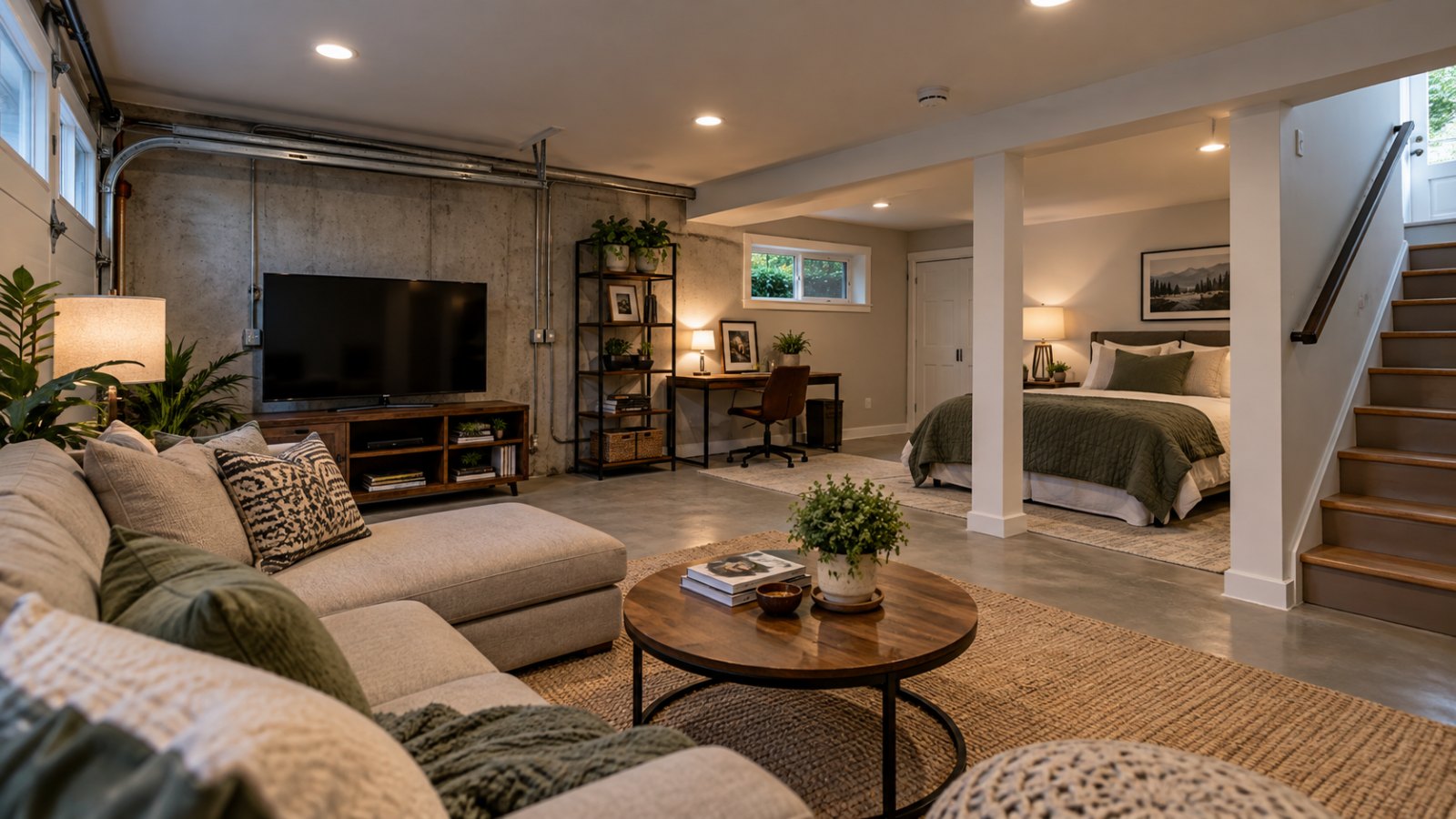
You can sell a home with unpermitted work in Pierce County, but you should disclose what you know. Washington’s seller disclosure statement asks whether there have been conversions, additions, or remodeling and whether all building permits and final inspections were obtained. From there, sellers usually choose one of three paths: disclose and price the home accordingly, get the work permitted before listing, or remove it. The right choice depends on what the work is, whether it’s safe, and how much it affects value.
Unpermitted work is more common than most people think: a finished basement, a garage converted to living space, a deck, a moved wall, a water heater swapped without a permit. Some of it is minor. Some can affect financing, insurance, and safety. Here’s how to handle it well.
Start with disclosure
Most Washington residential sellers must give buyers the disclosure statement required by RCW 64.06.020, commonly called Form 17. It asks about conversions, additions, and remodeling, whether permits and final inspections were obtained, and about zoning violations or nonconforming uses.
Answer based on what you actually know. If a previous owner did the work and you’re unsure, say so rather than guessing. Hiding a known problem is where sellers get into trouble after closing. When in doubt about wording, ask a real estate attorney.
Find out what’s on record
Before deciding anything, confirm what was permitted:
- Know who issues permits for your address. Unincorporated areas are handled by Pierce County Planning and Public Works. Cities such as Puyallup, Tacoma, Bonney Lake, and Gig Harbor run their own permit departments.
- Look up the permit history for the property with the right jurisdiction.
- Check whether the work needed a permit at all. Some minor work is exempt. Pierce County publishes a guide to work exempt from building permits for unincorporated areas.
Your three options
| Option | Good fit when | Watch for |
|---|---|---|
| Disclose and sell as-is | The work is sound and relatively minor, or you don’t have time to permit it | Fewer buyers, more negotiation, possible lender or appraisal limits |
| Permit it before listing | The work adds real value, like a finished basement or added bedroom | Time, fees, and possibly opening walls or engineering |
| Remove or restore it | The work is unsafe or can’t reasonably be brought up to code | Cost of demolition, and you lose the space |
What permitting after the fact can involve
For unincorporated areas, Pierce County’s guide to unpermitted existing residential buildings outlines the process. Permitting existing work typically requires a residential construction application, a site plan, plans of the unpermitted work, and a structural investigation report from a Washington-registered engineer, followed by inspections and a final approval. Fees depend on the scope of work. Cities have their own processes, so check with the right office.
The practical takeaway: permitting after the fact can take a while. If it’s worth doing, start well before you plan to list.
Wondering if it’s worth permitting?
Josh can help you estimate how the work affects value and buyer demand before you spend money on it. Talk through your options.
How buyers, lenders, and appraisers may react
- Inspectors often flag it. Buyers’ inspectors commonly note work that looks unpermitted, which can lead to repair requests or renegotiation.
- Appraisals may treat it differently. Appraisers may give less value to space that wasn’t permitted, which can matter if the price depends on that square footage. See our guide to low appraisals and appraisal gaps.
- Some buyers will walk. Others, especially cash buyers or those comfortable with projects, may be fine with it at the right price.
A pre-listing inspection can help you see the issue the way a buyer’s inspector will, so there are fewer surprises once you’re under contract.
Pricing a home with unpermitted work
The goal is a price that reflects the home as it legally is, plus a clear explanation of what’s there. Marketing an unpermitted room as a legal bedroom, for example, invites problems. We usually help sellers compare the likely result of selling as-is with the cost and time of permitting, the same way we look at any as-is versus repair decision.
Frequently asked questions
Do I have to disclose unpermitted work done by a previous owner?
Answer the disclosure questions truthfully based on your knowledge. If you know about it, disclose it. If you’re unsure, say you don’t know rather than answering no.
Will the county make me fix it if I apply for a permit?
Permitting existing work generally means bringing it into compliance, which can involve inspections and corrections. Ask the permitting office what your specific project would require.
Can I still sell to a buyer using a loan?
Often, yes. It depends on the work, its condition, the appraisal, and the loan program.
Get a plan before you list
Unpermitted work is a solvable problem when it’s handled early and honestly. Book a complimentary strategy session with Josh Barnard and The Barnard Group to decide whether to disclose and sell, permit, or remove it.
This article is general information, not legal advice. Permit rules vary by jurisdiction; confirm requirements with your city or Pierce County and consult an attorney about disclosures.