

Does a hot tub or pool add value when you sell a home in Pierce County?
A hot tub or pool can help a Pierce County home stand out, but it rarely adds dollar-for-dollar value — and in our rainy climate many buyers see a pool as upkeep, not a feature. A working, well-maintained hot tub is usually a modest plus; an older or non-working one can become an inspection item or a request to remove it. Before you list, decide whether the spa stays, get it serviced, gather permits and records, and disclose what you know on Form 17.
Sellers ask me this a lot, usually while standing on their back patio. They spent real money on that hot tub or pool, and they want to know if they’ll get it back. The honest answer: it depends on the condition, the type, and who’s buying.
Here’s how I walk sellers through it. If you’re still building the overall plan for your sale, our Pierce County home selling guide covers pricing, prep, and the full process.
How buyers here see hot tubs and pools
Hot tubs generally land well in Western Washington. A covered hot tub on a patio fits the way people live here — especially with fall and winter evenings that start at 4:30. Buyers looking for outdoor living space often count it as a bonus.
In-ground pools are more polarizing. Our swimming season is short, and buyers often weigh a pool against the cost of heating, chemicals, covers, liner or plaster repairs, and insurance. For some buyers it’s a dream feature. For others it’s a reason to skip the home. That narrows your buyer pool, so it’s rarely a pure value-add.
Above-ground pools are usually treated as personal property. Most buyers expect them to be removed unless the purchase agreement says otherwise.
In any case, condition matters more than presence. A clean, working, permitted spa with records reads as “cared for.” A cloudy tub with a torn cover reads as “what else was skipped?”
Decide early: does it stay or go?
Start here, because it affects pricing, marketing, and the purchase agreement.
- Built-in or hard-wired spas and in-ground pools are typically treated as part of the property. Plan on them conveying unless you negotiate otherwise.
- Freestanding hot tubs are a gray area. If you plan to take it with you, say so clearly in the listing and exclude it in the purchase agreement. Surprises here create friction late in the deal.
- Older or non-working units are often better removed before listing. Removing a dead hot tub and patching the pad or deck usually costs less than the credit a buyer will ask for after inspection.
What to have ready before you list
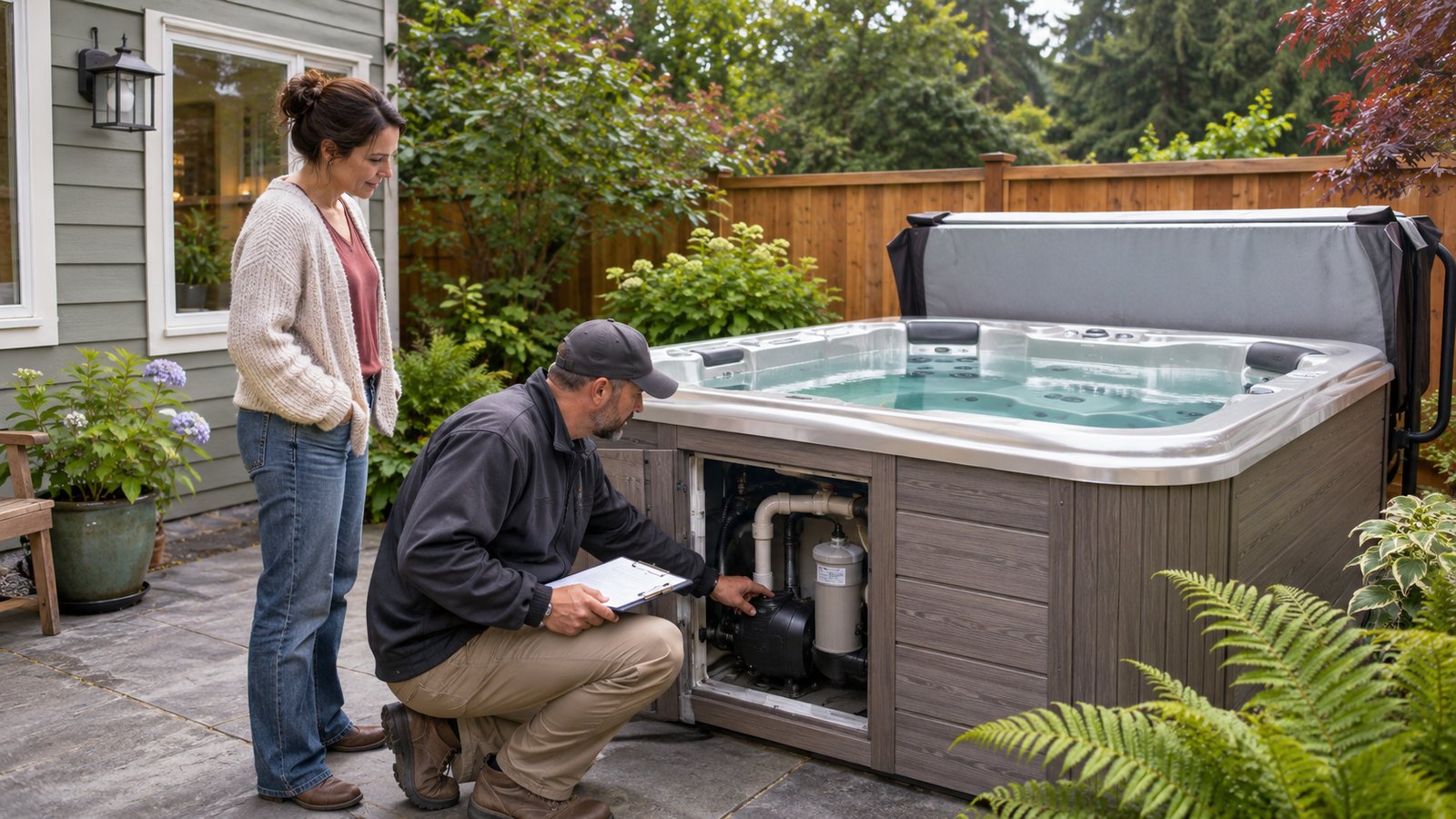
- Service it. Have a spa or pool technician check the heater, pump, jets, controls, and cover, and fix inexpensive items now.
- Find your permits. Hot tubs usually need a dedicated electrical circuit, and in Washington that work is typically permitted through Labor & Industries or the local jurisdiction. In-ground pools generally need building and electrical permits. If you can’t find records, ask your city or Pierce County Planning & Public Works what’s on file.
- Check the barrier and safety items. Local building codes set fencing, gate, and cover requirements for pools and spas. A locking safety cover on a hot tub and a self-latching gate on a pool area are the basics buyers and inspectors look for.
- Gather records. Service invoices, the age of the unit, and any warranty paperwork help buyers feel confident.
- Stage it. Clean water, a fresh or clean cover, tidy landscaping, and a bit of lighting make it photograph well. Fill and run it for showings if it’s staying.
Inspection and disclosure
Most general home inspectors do a limited check of hot tubs and pools — whether it powers on, visible leaks, electrical safety items like GFCI protection, and the condition of the cover or decking. Some buyers order a separate pool or spa inspection. Expect questions about the heater, pump, and electrical work.
On the disclosure side, Washington sellers complete the Form 17 seller disclosure. Disclose known defects, past repairs, and any work done without permits. Being upfront protects you and reduces renegotiation risk. If anything was installed without a permit, our guide on selling a home with unpermitted work explains your options.
If the inspection does turn up problems, you’ll usually choose between repairing, offering a credit, or adjusting price. Our breakdown of inspection requests, repairs, and credits walks through how those negotiations typically go.
How it affects pricing
When I price a home with a spa or pool, I look for comparable sales that had one — and I don’t simply add the installation cost to the price. Buyers pay for the overall package: usable outdoor space, condition, and location. A well-kept hot tub might help your home sell faster or edge out the competition. An in-ground pool can help with the right buyer, but it can also extend days on market in our climate. That’s why the pricing and marketing plan should reflect who your likely buyer is.
Frequently Asked Questions
Does a hot tub add value to a house in Washington?
A clean, working hot tub can make a Western Washington home more appealing, but it usually adds modest value rather than its full cost. Its biggest benefit is often helping your home stand out against similar listings.
Do I have to leave my hot tub when I sell?
Hard-wired or built-in spas are usually treated as part of the property. A freestanding unit can be excluded, but you should say so in the listing and in the purchase agreement so there’s no confusion.
Should I remove an old hot tub before selling?
If it doesn’t work or needs major repairs, removing it before listing often costs less than the credit a buyer will request after inspection. Patch or clean up the area so it reads as usable outdoor space.
Does a pool hurt resale in Pierce County?
A pool doesn’t automatically hurt resale, but it narrows your buyer pool because of upkeep, a short swim season, and insurance considerations. Condition, permits, and safety features make a big difference in how buyers react.
A hot tub or pool can be an asset when it’s working, documented, and presented well. If you’re weighing a move, The Barnard Group’s complimentary Home Selling Strategy Session walks you through your home’s current value, your options, and a plan built around your timeline. You can book yours at barnardgroupre.com/sellit.
About Josh Barnard
Josh Barnard is the founder of The Barnard Group and has spent over 20 years helping families navigate some of life’s biggest moments through real estate. Known for his “Work Hard. Be Kind.” approach, Josh combines expert market knowledge, innovative marketing, and genuine care to help homeowners make confident decisions about their next chapter. Whether someone is buying their first home, moving up, downsizing, or relocating to Pierce County, his mission is simple: serve people well, create unforgettable experiences, and help families build a life they love.